

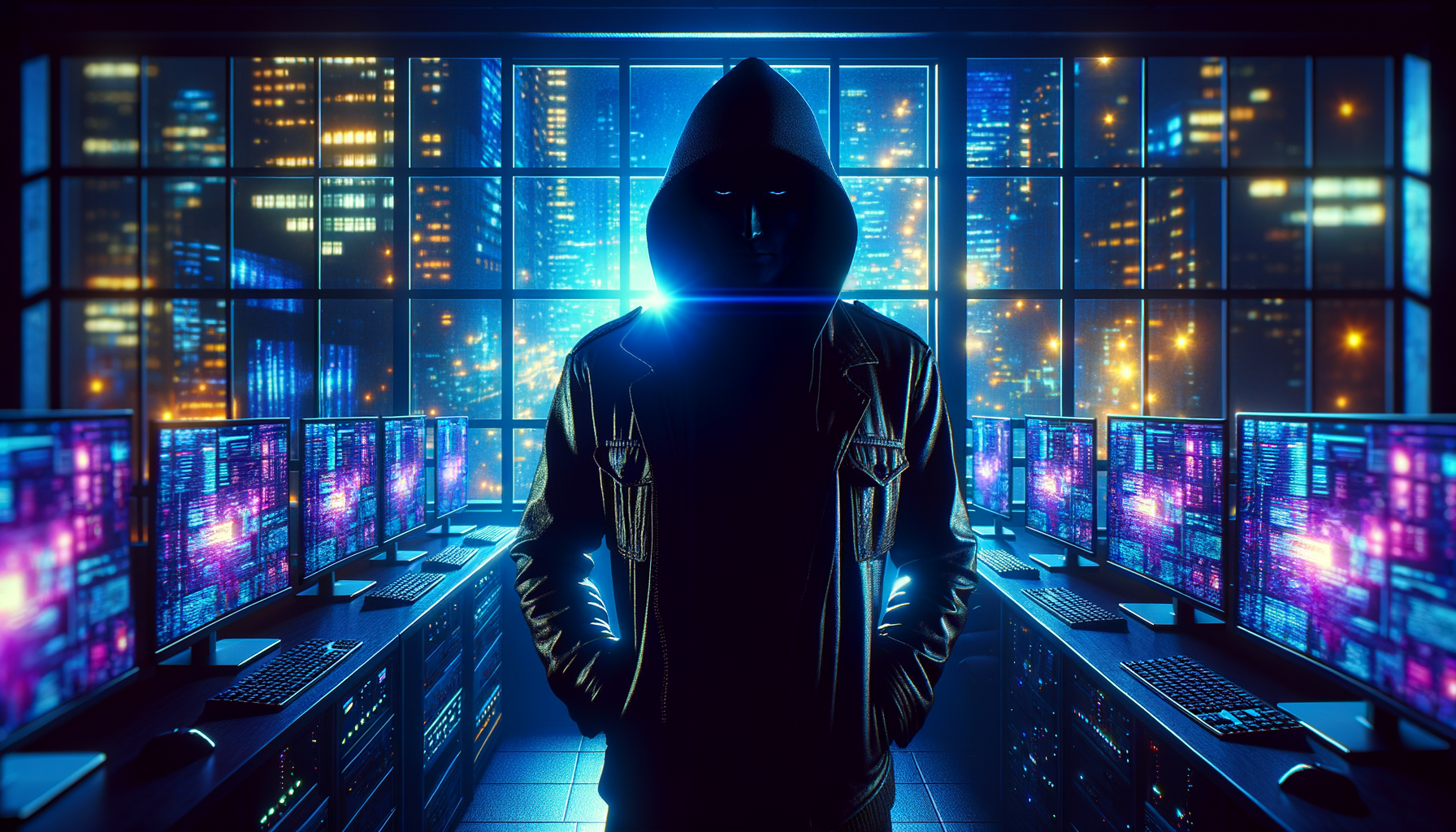
Jennifer Martinez doesn't let her children use any smart devices anymore. No tablets. No voice assistants. Not even the smart thermostat that came with their apartment. "If he can hack into police systems," she says, her voice trembling, "he can hack into my home."
She's not alone. Across Metro City, families are disconnecting from the digital world they once embraced, driven by fear of a terrorist who can seemingly reach through any screen, any device, any connection to the internet.
TerrorByte has killed at least twelve people. He's caused millions in infrastructure damage. And despite the combined efforts of local and federal law enforcement, he remains completely unknown — a ghost in the machine who strikes without warning and disappears without a trace.
Living Offline
At Jefferson Elementary School, Principal Dorothy Williams has noticed a disturbing trend: parents are pulling children out of after-school programs that use computers.
"These kids are falling behind because their parents are terrified," Williams said. "But I understand it. If I had young children, I'd be terrified too."
The fear isn't irrational. TerrorByte has demonstrated the ability to control everything from traffic lights to hospital equipment. Last week, three children were injured when a crosswalk signal malfunctioned — an incident many believe was TerrorByte testing his capabilities.
"My daughter asks me every night if the 'bad computer man' is going to hurt us. She's seven years old. Seven. What am I supposed to tell her?"
— Michael Torres, father of two
The Psychological Toll
Dr. Amanda Foster, a child psychologist at Metro General Hospital, says she's seen a 300% increase in anxiety-related appointments since TerrorByte's attacks began.
"We're dealing with an invisible threat that can strike anywhere, anytime," Dr. Foster explained. "Children especially struggle with this. They can't see the danger, they can't understand it, but they know their parents are afraid. That's incredibly damaging to their sense of security."
Adult anxiety has spiked as well. Sales of "dumb" phones — basic devices without internet connectivity — have increased 400% in Metro City. Hardware stores report unprecedented demand for manual locks and non-electronic security systems.

"Heroes" Don't Create Orphans
Some on social media continue to defend TerrorByte as a "necessary evil" fighting corruption. The Martinez family has a different perspective.
"My cousin worked as a security guard at a building TerrorByte attacked," Jennifer Martinez said. "He's in the hospital now with burns over 40% of his body. He wasn't a criminal. He wasn't corrupt. He was just doing his job."
She paused, composing herself. "Heroes don't create orphans. Heroes don't give children nightmares. Whatever this person thinks he is, he's just a terrorist. Nothing more."
What Can Families Do?
Metro Police have released guidelines for families concerned about cyber-attacks, including maintaining offline backups of important documents, having analog alternatives for critical systems, and reporting any suspicious electronic behavior immediately.
"We will catch this individual," promised Chief Martinez at a community meeting last night. "Until then, stay vigilant, stay connected to your neighbors, and remember — we're all in this together."
For Jennifer Martinez and millions of others, that's cold comfort. "I just want my kids to grow up without being afraid," she said. "Is that really too much to ask?"


